

FedNow and the Development of U.S. Fast Payments
Key Takeaways
- FedNow is a real-time payment service launched by the Federal Reserve in July 2023 that has grown to over 1,700 participating financial institutions. It competes with Real-Time Payments (RTP), a private system launched in 2017.
- While FedNow and RTP have developed significantly, both systems lag international counterparts in transaction volume, primarily because Americans already have extensive access to digital payments and "instant-feel" alternatives.
- Despite entering a crowded market, FedNow has the long-term potential to become a core national infrastructure as the U.S. payments system modernizes, leveraging its design features and wide accessibility.
FedNow is a real-time payment service developed by the Federal Reserve that enables individuals and businesses to send and receive instant payments around the clock through participating financial institutions. But how does it compare to competitors and other payments alternatives? In this article, we examine FedNow's adoption and usage pattern and compare it to other fast-payment services, both in the U.S. and abroad. Our analysis explores the unique growth pattern of FedNow and assesses its long-term prospects.
FedNow and RTP
FedNow is a relatively new fast-payment service, launched in July 2023. Another fast-payment service, Real-Time Payments (RTP), was introduced in November 2017 by The Clearing House (TCH), which is owned by a consortium of some of the largest U.S. banks. The two services share key similarities yet differ notably in system features, market adoption and usage patterns.
System Features
Both FedNow and RTP provide fast-payments services, which enable near-instant money transfers between bank accounts and are available 24/7/365, with immediate fund availability and transaction confirmation for both senders and recipients.
They are both back-end payment rails, as end users do not use RTP or FedNow directly. Instead, banks and fintechs integrate these offerings into their own apps and services. This means the customer experience — including whether payments appear in real time, what transaction limits apply and whether person-to-person or bill-pay transactions are supported — depends entirely on how each participating financial institution implements the offering.
Both FedNow and RTP offer similar service features, including 24/7/365 real-time credit transfers, commonly accepted messaging standards,1 request-for-payment functionality and comparable per-transaction fees. The transaction limits are also similar: Limits for both platforms were raised from $1 million to $10 million in 2025. From the perspective of financial institutions and end users, the functionality, speed and cost of the two systems are broadly aligned.
However, the two use different settlement and liquidity models. RTP relies on a prefunded joint account held at the Fed, where participating financial institutions must commit commercial bank money in advance. This ensures instant settlement but creates liquidity costs and requires active prepositioning of funds. By contrast, FedNow settles payments directly in each bank's Fed master account, using central bank money and offering intraday liquidity management tools. As a result, FedNow places a lighter liquidity burden on smaller participants.
Adoption and Usage
Since its launch, FedNow has achieved significant institutional adoption, attracting 1,725 banks and credit unions, which represents 19.7 percent of U.S. financial institutions as of the first quarter of 2026. Meanwhile, its usage reaches 2.73 million transactions for $271.25 billion per quarter.
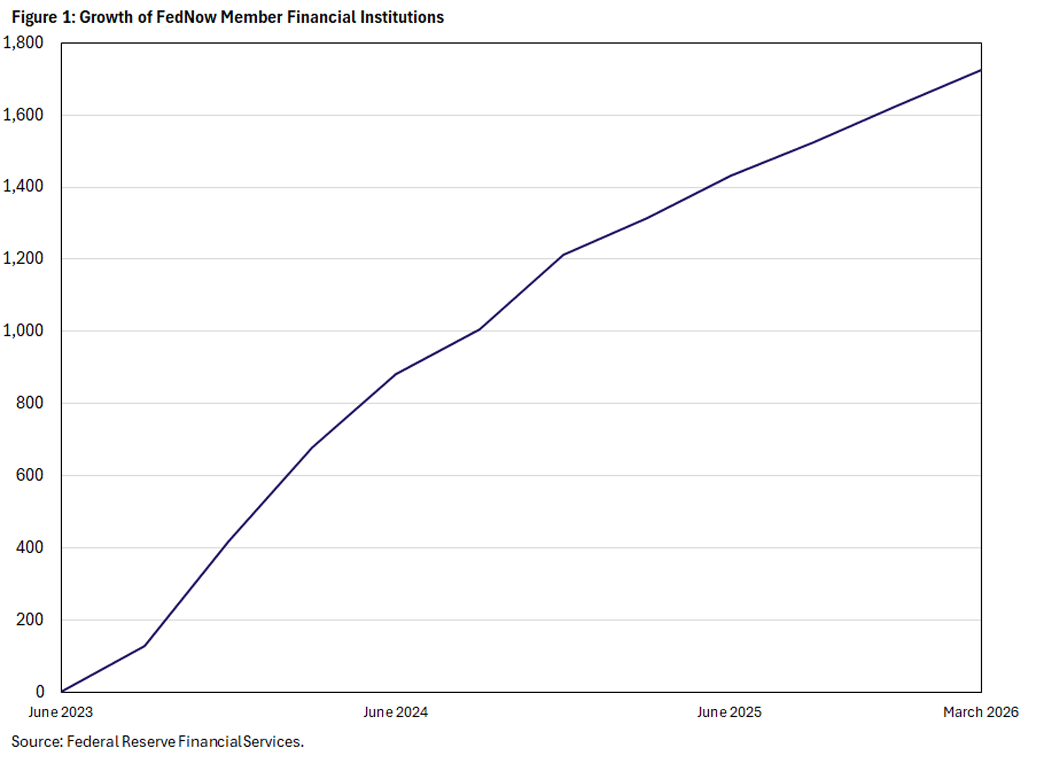
Table 1 illustrates the membership profiles of FedNow and RTP.2 Despite being newer, FedNow has higher enrollment than RTP from both banks and credit unions. In contrast, RTP maintains connections to a greater percentage of total demand deposits due to stronger adoption among large financial institutions. Notably, there is significant overlap between the platforms, with 70 percent of RTP participants also maintaining FedNow membership and 49 percent of FedNow members having joined RTP.3
| FedNow | RTP | Both | |
|---|---|---|---|
| Number of Member Financial Institutions | |||
| Banks | 1,155 | 753 | 532 |
| Credit Unions | 570 | 440 | 305 |
| Total | 1,725 | 1,193 | 837 |
| Share of U.S. Financial Institutions | |||
| Banks | 26.4% | 17.2% | 12.2% |
| Credit Unions | 13.0% | 10.1% | 7.0% |
| Total | 19.7% | 13.6% | 9.6% |
| Sources: Federal Reserve Financial Services, The Clearing House, commercial bank call reports and credit union call reports. | |||
In terms of usage, RTP leads FedNow in transaction volume and total value. The first quarter 2026 data show that RTP currently processes 128 million transactions for $480 billion per quarter, an average of $3,750 per transaction.4 In comparison, FedNow has an average value of $99,414 per transaction, indicating different use-case portfolios from RTP.
Cross-Country Comparison
While both RTP and FedNow have grown significantly, their combined volume remains modest compared to the rapid development of fast payments in many other countries. A 2024 study highlights growth of fast payments in a dozen economies, especially emerging markets: Monthly fast-payment transactions per capita reached 35 in Thailand (via PromptPay), 27 in Brazil (via Pix), 13 in Sweden (via Swish) and 11 in India (via UPI) in 2023.5 By comparison, the U.S. recorded only 0.12 monthly fast-payment transactions per capita (RTP and FedNow combined) as of the first quarter of 2026.
There is also a notable difference in average transaction value between the U.S. and the countries highlighted in that study. The average transaction values for the four systems mentioned above — PromptPay (around $60), Pix (around $92), Swish (around $57) and UPI (around $6) — are significantly less than the averages for the U.S. ($3,750 for RTP and $99,414 for FedNow).6 These low average transaction values reflect the intensive use of fast payments for person-to-person (P2P) and small person-to-business (P2B) transactions, often serving as a digital substitute for cash.
It is worth noting that, although the U.S. has only two true fast-payments rails (RTP and FedNow), consumers experience a broad range of instant-feel payment options that post transactions immediately even though final settlement occurs later. For example, Zelle instantly updates account balances through bank-to-bank messaging but may settle later via the Automated Clearing House (ACH).7 Same-day ACH accelerates processing but still follows daily batch windows. Also, card push-payment services such as Visa Direct and Mastercard Send deliver funds to consumers within seconds, though settlement follows the card-network clearing cycle.8 These services function as instant payouts (though not true real-time payments), and the recipient's bank usually advances the funds before receiving final settlement and bears the financing cost.
In addition, many U.S. users rely on digital wallets (such as PayPal, Venmo, Cash App or Apple Cash) that offer instantaneous value transfer within closed internal ledgers, with funds remaining inside the platform until users withdraw them. Moving money into or out of these wallets, however, typically relies on ACH or card-network push-to-card rails rather than true real-time settlement, and many apps charge a fee for instant cash-outs to a bank account. In cases where they make funds available to their users before external settlement completes, the platforms rely heavily on user verification, transaction monitoring and fraud-risk scoring to manage credit and fraud exposure.
Taken together, these existing instant-feel alternatives reduce consumer demand for RTP and FedNow services, especially for P2P and low-value P2B payments, where real-time settlement is less critical.
Leapfrogging in Payment Innovations
As discussed in Zhu Wang's recent research paper "Technology Adoption and Leapfrogging: Racing for Mobile Payments" (co-authored with Pengfei Han), this pattern echoes broader global evidence: Developing economies can leapfrog advanced economies in adopting payment innovations because they lack entrenched electronic payment infrastructures. In many developing countries, users who previously relied heavily on cash benefit substantially from adopting fast payments. By contrast, card networks and ACH are ubiquitous and deeply embedded in daily transactions in the U.S. Thus, the incremental benefits of adopting entirely new payment rails are more limited for both users and institutions, leading payment innovation to piggyback on existing systems.
Against this backdrop, real-time RTP and FedNow activity in the U.S. is driven less by P2P or low-value P2B payments. According to industry reports, RTP's volume growth is mainly driven by a mix of use cases, including gig economy payouts, account-to-account transfers, digital wallet funding and business-to-business payments.9
FedNow exhibits an even higher average transaction value than RTP, in part due to its later entry. Compared with RTP, which has accumulated a more diversified transaction mix, FedNow remains in an early and cautious adoption phase, with initial usage concentrated in higher-value use cases such as instant payroll, auto-loan disbursements and digital-wallet defunding. More recently, FedNow has also supported large-value transactions including real estate settlements, brokerage account defunding and insurance payouts.10
Prospects of FedNow
FedNow entered a payment landscape already crowded with instant-feel alternatives. Consumers and businesses can already access rapid payment experiences (such as through Zelle), push-to-card services (such as Visa Direct and Mastercard Send), same-day ACH and digital wallets (such as PayPal, Venmo, Cash App and Apple Cash). Because users perceive these options as "instant," financial institutions face limited pressure to invest in enabling fast payments via FedNow or RTP. Moreover, RTP's first-mover advantage and widespread adoption among major financial institutions make it a strong competitor to FedNow in the growing real-time payments market.
While achieving ubiquitous use of FedNow will take time, its introduction as a new instant payment option offers important social benefits from the outset. First, it increases competition in the payments market, disciplining pricing and improving the quality of alternative services. Second, it serves as a critical substitute payment rail to traditional payment services for resilience purposes, ensuring the financial system maintains functionality even when primary systems experience disruptions. Third, it establishes a neutral, accessible infrastructure that reduces barriers to entry for smaller financial institutions and fintech companies, promoting innovation and financial inclusion by enabling institutions of all sizes to offer real-time payment services without relying solely on private networks.
Over the longer term, FedNow holds strong potential to become a significant component of national real-time payment infrastructure. FedNow's key advantages include:
- The Fed's broad reach to financial institutions
- Its commitment to low and transparent pricing
- Real-time settlement in central bank money that simplifies liquidity management and reduces risk
As U.S. banking infrastructure modernizes and open-banking APIs expand, saving the liquidity costs behind the "perceived instant payments" will become increasingly desirable. FedNow could then emerge as a primary real-time payment rail for consumer and business applications. Its widespread accessibility and foundation in public infrastructure position FedNow favorably to support a unified national real-time payments system over time.
Zhu Wang is vice president for research in financial and payments systems, and Vinh Phan is a research associate, both in the Research Department at the Federal Reserve Bank of Richmond.
ISO 20022 is an international standard for electronic data interchange between financial institutions. It defines a common platform for creating, exchanging and interpreting financial messages, covering payments securities trading, credit and debit card transactions, and other financial information.
The FedNow member information in Table 1 is dated as of the first quarter of 2026. The RTP website states that RTP reached 1,260 members as of May 2026. For our purposes, Table 1 uses RTP member roster of financial institutions listed on the RTP website as of June 11, 2026.
Among banks, 71 percent of RTP members maintain FedNow membership, while 46 percent of FedNow members have joined RTP. Among credit unions, 69 percent of RTP members maintain FedNow membership, while 54 percent of FedNow members have joined RTP.
See the RTP Report for Q1 2026 (PDF).
See the 2024 study "Fast Payments: Design and Adoption" by Jon Frost, Priscilla Koo Wilkens, Anneke Kosse, Vatsala Shreeti and Carolina Velásquez.
Historically, most Zelle volume settled through ACH. Over time, an increasing share of transactions between RTP-enabled banks can settle through RTP.
Visa Direct and Mastercard Send provide near-universal reach across U.S. debit cards, enabling instant push-to-card payments. These services charge fees to the sending financial institution or fintech, which are typically higher than those associated with ACH, RTP or FedNow.
See the 2025 article "RTP Network Hits 1.8 Million Daily Transactions."
See the 2025 article "FedNow Service Progress Update: Two Years of Growth, Innovation" by Nick Stanescu.
To cite this Economic Brief, please use the following format: Wang, Zhu; and Phan, Vinh. (August 2026) "FedNow and the Development of U.S. Fast Payments." Federal Reserve Bank of Richmond Economic Brief, No. 26-28.
This article may be photocopied or reprinted in its entirety. Please credit the authors, source, and the Federal Reserve Bank of Richmond and include the italicized statement below.
Views expressed in this article are those of the authors and not necessarily those of the Federal Reserve Bank of Richmond or the Federal Reserve System.


Receive a notification when Economic Brief is posted online.