


Ellen McGrattan
On measuring what businesses do, developing effective tax policy, and searching for answers beyond the lamppost.
Econ Focus
First/Second Quarter 2026

EF: What led you to your early research focus on trying to understand business cycles?
McGrattan: In grad school, I stumbled upon a paper by Finn Kydland and Ed Prescott that was game changing for me. Their revolutionary idea, which might sound obvious today, was that you should write down a theoretical model, simulate the data from it, and then match it up head to head with actual economic data. That wasn't what economists were doing at the time. They would write down a theoretical model, understand its inner workings, and then put up a big wall between the model and the empirical work. Kydland and Prescott decided to take all the warts and pimples of an economic model, make predictions based on it, and go head to head with the data. That was the first time I had ever seen that done. I think it is the right approach.
It just so happens that what they were analyzing in that paper was business cycles. They were trying to understand why we see very large movements in investments, employment, and GDP over the cycle. The standard answer at the time was that the source of fluctuations was monetary in nature. But when you put the Fed in any of the models being analyzed at the time, monetary shocks — or more generally financial disruptions — have little impact on the business cycle. So, Kydland and Prescott realized that adding the Fed wasn't the answer, and they pointed to something else: Total factor productivity (TFP).
Some might say that TFP is just a measure of our ignorance — it's what we don't understand. In some sense, I've been struggling with trying to look inside the black box of TFP all my career. My interest in business cycles partly stems from trying to measure what goes into TFP. That can be hard outside of big business cycle events like the Great Depression, the 2008 downturn, or the tech boom in the 1990s. If you just have ups and downs of 3 percent to 5 percent, you can't get much precision from the data.
EF: How did the recession of 2008–2009 affect the way economists think about business cycles? Did it help you shine any light in the black box of TFP?
McGrattan: I think we're still pretty ignorant about it. I co-authored a paper at the time called "Business Cycle Accounting" with Varadarajan Chari and Patrick Kehoe mainly to critique Bernanke and Gertler, who studied the Great Depression. They argued that financial market disruptions amplify economic downturns. But when you build a prototype model, like the Bernanke and Gertler models, to explore this hypothesis, it has predictions that are grossly at odds with the data.
In the work with Chari and Kehoe, we developed a method that could point researchers to more promising theories. The main idea behind the method is to work with a prototype model and actual data and determine where exactly the model is off. We add "wedges" to get a perfect fit between model and data and then determine which of the wedges are quantitatively important — that helps us think about the factors our theories are missing.
For example, suppose you abstract from the fact that companies make certain kinds of investments in intellectual property. You only put physical capital in your model, and you just ignore R&D, customer bases, branding, and other intangible assets. Then TFP in your model would be picking up these investments. When you go to do tax policy analysis or monetary policy analysis, you would wrongly treat TFP as something that's exogenous when, in fact, it's investments that you don't measure. So, you need some theory for what the black box is.
EF: Is that what sparked your research interest in intangible investments?
McGrattan: Yeah, it goes back to Kydland and Prescott. What is TFP? It's what we don't know, it's the part that we need to fill in. It's not just some magic dust that's in the air. People are making investments and doing things better. If you were to travel back in time five decades, economic activity would look a lot different than it does today. But how do you model that? How do you think about that? Little by little, that's what we're trying to fill in. What is different about the economy now, and how does it need to be modeled?
EF: Why are intangible investments so difficult to measure? And has our ability to measure them improved?
McGrattan: If you buy, say, a computer, it has to be put on your balance sheet. But if you're a dentist and you spend time building your patient list, that's not put on any balance sheet. That patient list is the thing you sell when you retire or relocate, and that asset contributes to the value in the business, but we never see it until it gets sold or transferred somehow.
There are 40 million active businesses in the United States, and most have assets that we can't see. Assets like customer bases or trademarks — until there's a transaction, we can't see them. You might have a good accounting system that you developed within your business, or you're a chef and you have recipes, and we can only see those things if you trade them. But most ongoing businesses don't list these assets on a balance sheet, so we never get to see them. And that's why we need a theory to infer it.
I was just talking to a colleague who was trying to use Chinese data to measure TFP, and he was confused about what he was seeing. Some new firms had TFP that was negative, others had TFP that was really high, and it just didn't seem to make sense. I said, it doesn't make sense because measured TFP does not help you see what the businesses are actually doing. He said, no, I can, I've got all the balance sheets and the financial statements. Unfortunately, a lot of activity is not on balance sheets or financial statements.
"There are 40 million active businesses in the United States, and most have assets that we can't see."
It all ties back to work I was doing to measure movements in the economy over the business cycle, but now I would say the bigger issue is how to measure all activity in the U.S. economy.
EF: Have these types of intangible assets become more important as the U.S. economy has become less concentrated in manufacturing and more service-based over the last century?
McGrattan: The fact that the U.S. economy is now service-based presents a new measurement challenge. We do not have prices and quantities for many service activities. What's the price of a surgery? Did the surgeon sell a patient one heart surgery for a certain dollar amount? No, they only report how much they get paid for their job overall, and that's all we know.
So, with services, you're really kind of stuck. You can pretend you see prices, but it's getting murkier because we're moving away from buying just bundles of wheat or other physical goods. And even bundles of wheat are not so easy to price because there are different qualities of wheat.
I'm working on a book based on a lecture I gave in honor of Zvi Griliches. He was a Harvard economist famous for studying productivity by looking at the development of hybrid seeds. He was trying to understand the returns from investing in new technologies, and the numbers he came up with were very high — something like 700 percent returns to investments. You would think that if there were 700 percent returns to investing in hybrid seeds, everybody would be working on it. Why do anything else? So that seems implausible, and he persisted in trying to better understand the impact of technological change and R&D and how we measure it. He gave a presidential address to the American Economic Association in 1994, and that's what I used as the basis for my lecture and now the book I'm writing.
He thought that we just needed better data to measure these things. We have much better data today. We can look at IRS data, we can gather prices from the web, but a lot of activity remains hard to measure. There's never going to be a perfect administrative dataset where the government records every activity. So, you've got to use theoretical models, the observations you can get (which are imperfect), and do what Kydland and Prescott did years ago, which is to compare predictions of the model with what you can observe. That will reveal the underlying latent activities.
The mission is to use the data we can get to understand how people react to policy changes. You're never going to be able to write to everyone and ask, 'What did you do?' Some people try with surveys, but response rates are low, and respondents oftentimes do not know what is being asked.
EF: How is tax analysis influenced by intangible investments?
McGrattan: An important consideration is tax evasion because it is hard to know if losses are due to owners investing in their businesses or underreporting income and overreporting expenses. That's why my co-authors and I have been working with the IRS and using their data to help them think about tax evasion and policies that could be more effective at identifying the likelihood of tax evasion.
When a dentist goes to a conference in Hawaii, it might not be to build their patient list; it might be that they are attributing a personal expense to their business. We're trying to figure out the difference between consumption on the job and legitimate investments in the business. How do you distinguish those? How do you capitalize things that don't have a price? If you build something and you didn't pay anybody to do it, how do you give it a value? We can do that with something like a house. You can count the number of bedrooms, compare it to other houses in the neighborhood, and use hedonic pricing to infer valuations. But how do you do that with a dentist's patient list?
EF: A recent paper where you used IRS data to shed new light on business activity was "On the Nature of Entrepreneurship," which you wrote with Anmol Bhandari, Tobey Kass, Thomas May, and Evan Schulz. What inspired you to look at that topic, and what did you find?
McGrattan: We wrote a proposal to the IRS on the topic of tax administration with businesses that are hard to observe because there's no third-party reporting for them. They claim investments on their taxes, but it's hard to see whether those are legitimate. We wanted to develop a theory, but our first step was to clear up some misconceptions in the economics literature based on surveys of entrepreneurs.
When we say entrepreneur, sometimes people may think about venture capitalists in Silicon Valley, but really, it's any business owner. They could be running a sole proprietorship or a corporation, but whatever the business is, they're not monitored by anyone.
Economists have made bold claims about entrepreneurs. For example, a common view based on survey data is that business owners choose to run a business even with low earnings because they want to be their own boss. But is it the case that they don't make money, or are they evading taxes? It could be that they just don't write down all the income they earn.
Researchers also have different ideas about how risky it is to start your own business. If the risks are high and the rewards are low, why would anybody run a business? Well, there are 40 million businesses in the United States. Why are they doing it?
Economists have written down models of business owners who are financially constrained, make less than they would if they were in paid employment, and face huge risks forcing them to keep their business small. They can never scale up, because if they tried, they would go under. They have no spouses — nobody else making income in the house. We wanted to see what the universe of businesses in the United States actually looks like. Then we can build theories about the income process and match those to what we see in the data. That doesn't get us all the way because we'd really like to know more, but it's a more accurate picture. Once you have that, you can think about how you might redesign tax administration and tax policy to either get better enforcement or remove loopholes.
EF: As you mentioned, many of the existing theories about entrepreneurs come from survey data. Surveys have been a staple source of data on the economy for a long time, but they have a lot of shortcomings. Do you have any thoughts on ways that surveys could be improved?
McGrattan: When we started working on that paper, we were originally using the Fed's Survey of Consumer Finances to think about modeling businesses and entrepreneurs, but we found that the public data and the aggregated survey data didn't match when comparing samples of private businesses. The original survey design is fine if respondents reference their tax returns when they answered questions, but in practice, that isn't always the case. When I worked for Bill Nordhaus, I learned that you have to ask people things they know the answer to because they're not going to go to their closet and dig out their tax return before taking the survey.
More importantly for us, survey questions can be unclear or misinterpreted by respondents. For example, the survey might ask if your business made income. If it didn't, the respondent might think they should put a zero for income earned, even if they in fact had a loss and therefore earned negative income. When you look at the survey data, it looks like there are no businesses with losses, but when you look at the IRS data, there are tons of people making losses. We found that the Survey of Consumer Finance was missing both the highest-earning and the largest-losing business owners.
When it comes to improving surveys that have been going on for a long time, there's a tension between making changes and maintaining consistency with past results.
EF: Can missing data not only skew policy prescriptions, but the direction of research as well?
McGrattan: Economists call this lamppost economics. You stand under the lamppost to look for your lost keys because that's where the light is, but the keys are in the dark. You can write models about things happening under the lamppost, but what we really want are the keys. I understand the incentives to write lamppost papers, especially for young economists just starting out. But there are a bunch of questions we need answers to, and we're only going to find those answers by leaving the lamppost.
You have to be disruptive. People like Ed Prescott, Tom Sargent, and Bob Lucas were disruptive. They were very disruptive. A lot of people at the time thought the new rational expectations wave was just mathy people who want to play with mathematical models. That wasn't it at all. They had to be disruptive and say, if we're going to learn anything, we have to challenge conventional wisdom.
EF: Would that be your main advice to young economists: Be disruptive?
McGrattan: I always tell my students, ask a question first. Don't read what other people have done. Decide on your own, especially when you're writing your first paper. It doesn't matter if you reinvent the wheel. If you're thinking about things without having somebody else in your head, you're going to come to a new creative idea. It's fine after you've done something to compare yourself, because then you can really sharpen your results and make clear distinctions between what has been done in the past and what you did.
I really don't like it when students are told to replicate findings from papers because that makes them too comfortable working with models that have already been analyzed to death. They learn an existing model and just make a small tweak to it. Before they do anything, I would rather they think of a good and, as yet, unanswered question and how they would go about answering it.
Often when I ask my students what they're working on, they tell me they have some interesting data. That's putting the cart before the horse. Start with an idea and then go down the path that may lead you to that data but may not. Don't start with data and try to identify a question; start with a question and identify what you need to reliably answer that question.
EF: In the late 1990s and early 2000s, you wrote some papers with Ed Prescott examining the tech stock boom. Do you see any parallels between that period and AI investments today?
McGrattan: Ed and I had been working with a model that wasn't too different from Kydland and Prescott, but we realized that things were just way off. For instance, the Kydland-Prescott model is terrible at predicting movements in the stock market because it assumes that the value of the stock market will be equal to the value of capital used by corporations. But you can take data from the stock market and data from the Bureau of Economic Analysis, plot the two together, and they don't look anything alike. And during the tech boom, they started deviating a lot.
"Don't start with data and try to identify a question; start with a question and identify what you need to reliably answer that question."
It led us to start thinking about what we were missing in our models, sort of like business cycle accounting. We eventually realized that the Bureau of Economic Analysis didn't include certain things like R&D and branding, which gets back to the missing intangible investments we talked about earlier.
If I were investigating AI investments today, which I think is a fascinating thing, I would look at the actual expenditures companies are making on data centers. There are only so many data centers you need, so what does our stock look like now, and is it continuing to grow? If there is overbuilding, are those data centers going to be used for other things?
There's also a fight over energy use, so I would be looking at energy prices. During the tech boom and bust, there was also a regulatory component. There were legal questions about who owned the fiber optic lines and who was going to get the cash flow from them.
My guess is that we're going to have a little bit of a shakeout with AI, but as we've been discussing, the big challenge is that we can't really see inside these companies.
EF: What are you working on now?
McGrattan: I am finally going to start looking at some of the IRS data related to the National Research Program. Under this program, the IRS randomly selects tax filers to undergo a thorough audit. It's very valuable to researchers because there is no selection bias, it is truly random. The entrepreneurship paper set us up well for this new project. We were able to develop models and match them up to the IRS data on business owners. Now, we're going to finally think about their behavior when it comes to tax administration. What happens after a business owner gets audited? Do they change anything? Do they close their business? Does it create any long-term deterrence? There's disagreement on that among economists.
In the past, researchers who studied these questions looked at household filings, so they only saw some aspects of the business. We're going to be looking directly at people who are running a business and filing taxes for a business. This will hopefully be informative about the models we wrote down. Do we have all the critical factors? How do we think about tax compliance in general?
What we know from past studies is that there's a lot of non-compliance, but it's very concentrated. I compare it to people who drive on the highway: Nobody goes under the speed limit, but there are some people who go 100 miles an hour. How can we predict ahead of time who's going to be going 100 miles an hour and who's going to be going a little over the speed limit?
There's a big debate between those who say tax non-compliance is concentrated at the top of the income distribution, and those who say it's present throughout the income distribution. It could be throughout the income distribution for business owners, who might make up a large share of the top income distribution overall. How much of that tax non-compliance is someone putting their trust funds in Bermuda versus a dentist writing down his trip to Hawaii as a business expense? It matters for policy.
I think economists sometimes forget that the reason we develop new theory is to use it for policy. It's not to have something to talk about at cocktail parties. It's to help us do counterfactuals, welfare analysis, and assess changes in policy.
Ellen McGrattan
Present Positions
Professor, Department of Economics, University of Minnesota; Consultant, Federal Reserve Bank of Minneapolis; Visiting Fellow, Hoover Institution, Stanford University
Selected Additional Affiliations
Member, Econometric Society Council, North America; President, Society for Economic Dynamics; Research Associate, National Bureau of Economic Research
Education
Ph.D. (1989), Stanford University; B.S. (1984), Boston College
 Download Article


Past Econ Focus Interviews

Third Quarter 2026
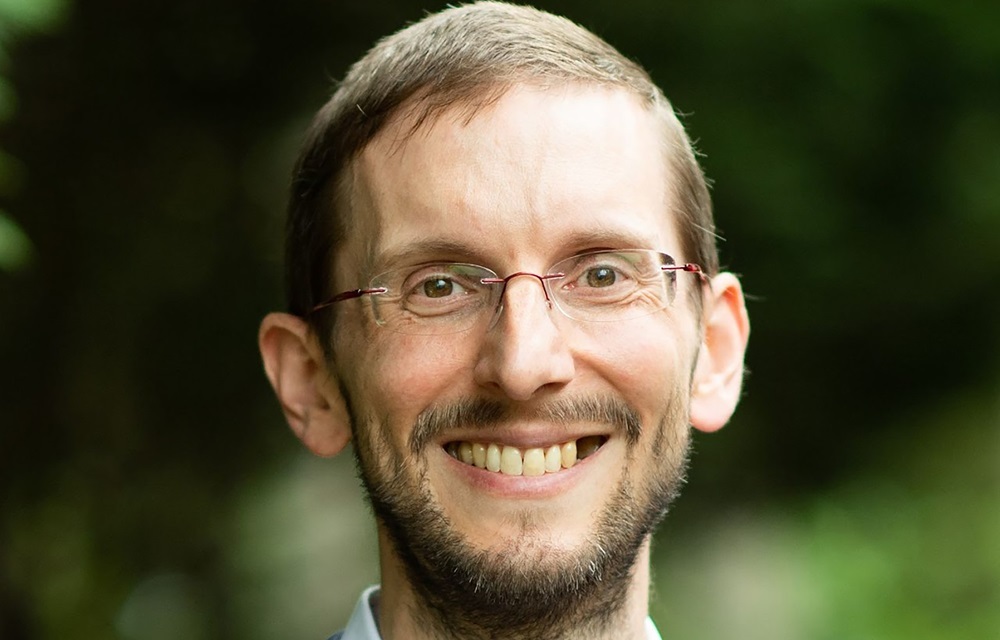
Christiane Baumeister discusses measuring the effects of oil shocks, changes in global energy markets, and forecasting tail risks.
Fourth Quarter 2025
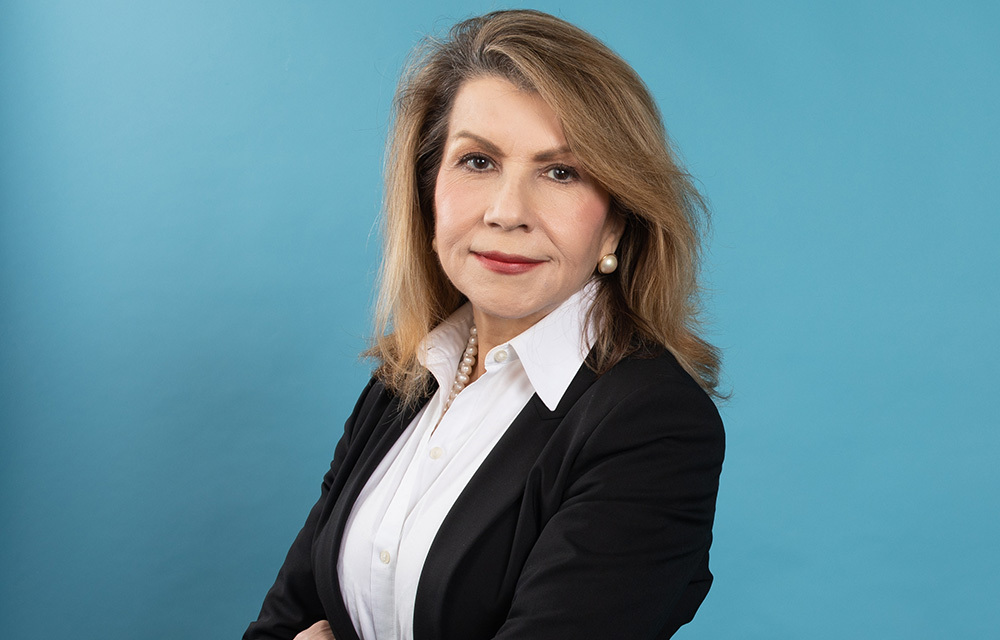
Anton Korinek provides insight on how rapid advances in AI might reshape the nature of work and how economists can help society prepare.
Third Quarter 2025
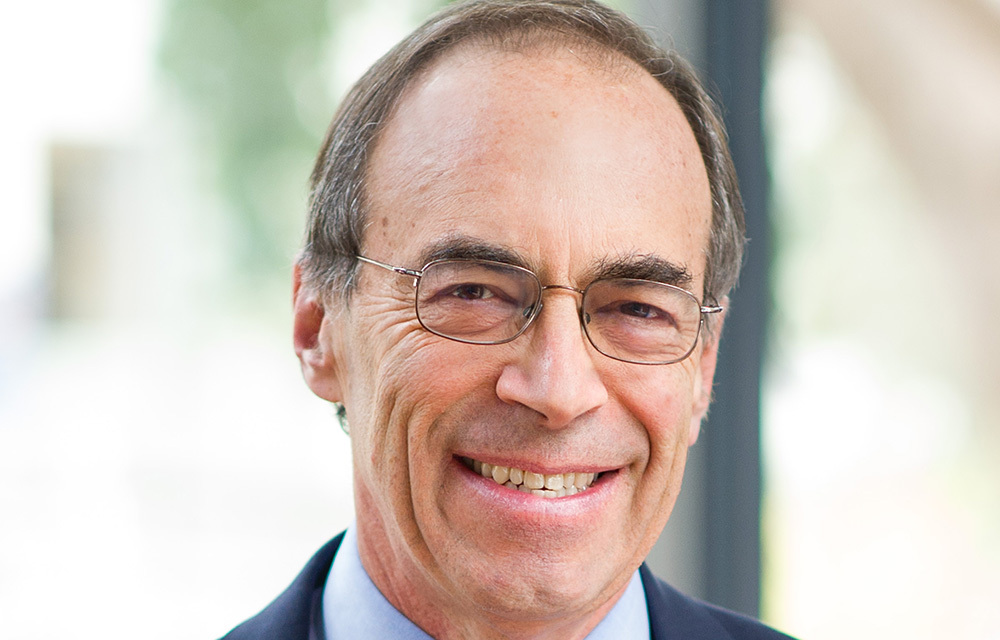
Economist Carmen Reinhart discusses the twin financial and currency crises, the future of the dollar, sovereign debt, and more.
Subscribe to Econ Focus
Receive an email notification when Econ Focus is posted online.
By submitting this form you agree to the Bank's Terms & Conditions and Privacy Notice.
Contact Us