


Remembering Bob Black and Al Broaddus
Econ Focus
First/Second Quarter 2026

CREDIT: FEDERAL RESERVE BANK OF RICHMOND
Bob Black (left) and Al Broaddus (right).
The Richmond Fed recently lost two of its former presidents: Robert (Bob) P. Black and John Alfred (Al) Broaddus. Their combined tenure at the Bank spanned 50 years, from 1954 when Black first arrived as a newly minted economist to Broaddus's retirement in 2004. Both leaders guided the Bank through turbulent economic times, from the Great Inflation of the 1970s and 1980s to the Great Moderation and dot-com boom and bust of the 1990s and early 2000s. Before serving as Bank presidents, both men were economists in the Bank's research department and helped shape its model of informing monetary policy through rigorous research and debate that continues today. As presidents, Black and Broaddus were both ardent supporters of monetary policies that prioritized stable prices and low inflation — positions that were tested and refined through their engagement with Richmond Fed economists.
"Where Al and Bob were similar is that they both brought curiosity and real presence to every human interaction," says Jeffrey Lacker, who joined the Richmond Fed as an economist in 1989 and served as Bank president from 2004 to 2017 after Broaddus retired. "They treated every soul in the Bank with dignity and genuine interest. I think that played no small part in the strong culture in the Bank during the years they were in charge."
Black died on Dec. 5, 2024, and Broaddus died on Oct. 26, 2025.
Bob Black

Black's tenure as president began during a challenging time for the Fed. The United States had gone off the gold standard two years earlier, and inflation was on the rise. A proponent of the monetarist school of economic thought, which emphasizes the role of the supply of money in determining the price level, Black advocated for the Fed to do more to restore price stability and developed a reputation as an "inflation hawk." In 1990, he testified in support of House Joint Resolution 409, which would have required the Fed to achieve an inflation rate of zero within five years of passage.
"Bob was an inflation hawk's inflation hawk," said Broaddus in a 2024 interview. "He understood the great damage high inflation could do to our economy and society by undermining the broader public's confidence in the Fed's commitment to protecting the purchasing power of everyday people's wages and savings."

"Bob was an inflation hawk's inflation hawk. He understood the great damage high inflation could do to our economy and society," said Broaddus.
"Richmond was the first of the regional Banks to formulate its recommendations for monetary policy through open debate between the Bank president and all the economists in the research department," says Robert Hetzel, an economist at the Richmond Fed from 1975 to 2018.
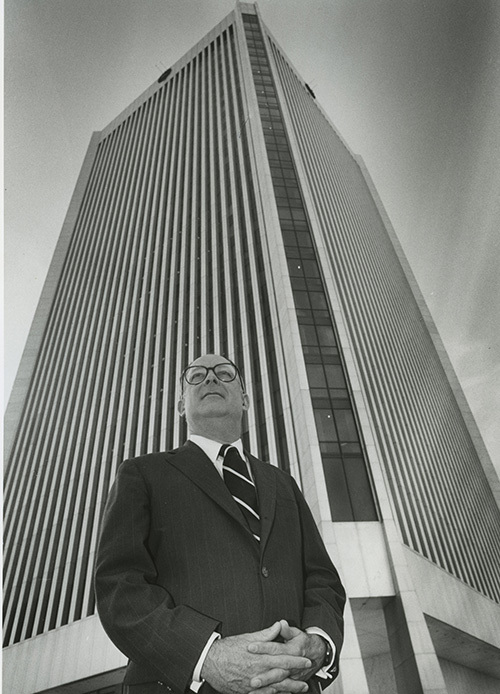
In 1978, Black presided over the Richmond Fed's move to its current headquarters overlooking the James River. Upon his retirement in 1992, he was remembered as a kind and respectful leader who took great interest in the well-being of all Bank employees.
"He was committed to a personal touch in the Bank," says Lacker. "I recall how excited he was on my job interview visit to find out I was a fellow Kentuckian. That was just like him — taking delight in his humble country roots and finding a way to connect with a new acquaintance. I miss his eternal optimism and good cheer."

Al Broaddus
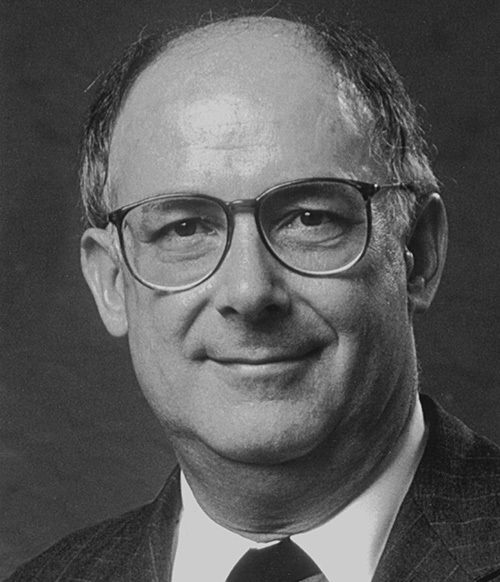
Broaddus succeeded Parthemos as research director in 1985, a position he held until he succeeded Black as Bank president in 1993. During his tenure as research director, Broaddus and his team of economists, led by Marvin Goodfriend, advocated increased transparency by the Fed at a time when its deliberations and decisions were largely kept behind closed doors. They argued that clear signals from monetary policymakers regarding their goals and intentions would enhance credibility, showing the public their decisions were based on sound macroeconomic arguments free from political influence.
"Al was a prince: always positive, always gracious, determined to give credit to others, and relentlessly focused on the Bank's people and their personal success," says Barkin.
As president, he forcefully, but always respectfully, brought those calls for reform before the Federal Open Market Committee (FOMC), the body responsible for setting interest rates. Chief among those changes was the establishment of an explicit inflation target, which he argued would anchor expectations about the Federal Reserve's commitment to long-term price stability.
"Famously, two FOMC meetings in the mid-1990s featured organized debates on the subject of inflation targeting, with Al advocating in favor and then-Gov. Janet Yellen taking the skeptical view," recalls John Weinberg, former research director and policy advisor at the Richmond Fed. "These debates were an important first step in the building of the consensus for the committee's eventual adoption of its 2 percent target."
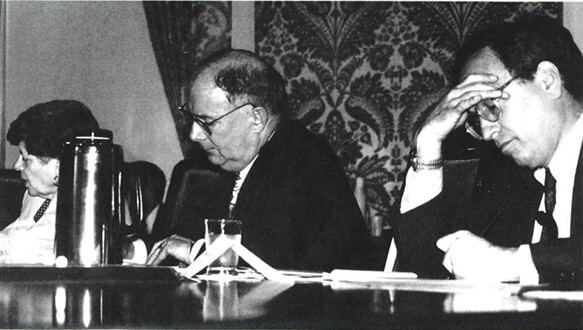
Broaddus's principled argument gradually gained the support of his FOMC colleagues, and inflation targeting is now a fundamental principle of U.S. monetary policy. Broaddus also furthered Black's work in elevating the intellectual profile of the Richmond Fed's research department. He recruited high-caliber economists committed to cutting-edge research that shaped monetary policy debates, and he hired influential monetary and banking economists as consultants who helped create a rich environment that strengthened the Bank's reputation as a thought leader across the Federal Reserve System.
 Download Article


Subscribe to Econ Focus
Receive an email notification when Econ Focus is posted online.
By submitting this form you agree to the Bank's Terms & Conditions and Privacy Notice.
Contact Us