

AI's Imprint on Prices and Inflation
Macro Minute
June 30, 2026
Investment related to artificial intelligence (AI) and data centers has made a significant contribution to growth in recent quarters. One study from the St. Louis Fed finds that AI-related investment added 0.97 percentage points to real GDP growth in the first three quarters of 2025. AI and data center activity have also left an imprint on prices and inflation. In this week's post, we look at some categories of inflation which have the fingerprints of AI.
Because the bulk of AI investment is done by businesses, evidence of AI's price effects is most visible in the producer price index (PPI). Figure 1 below shows the year-over-year increase in the price index for semiconductor and other electronic component manufacturing, as well as the index for computer and peripheral equipment manufacturing.
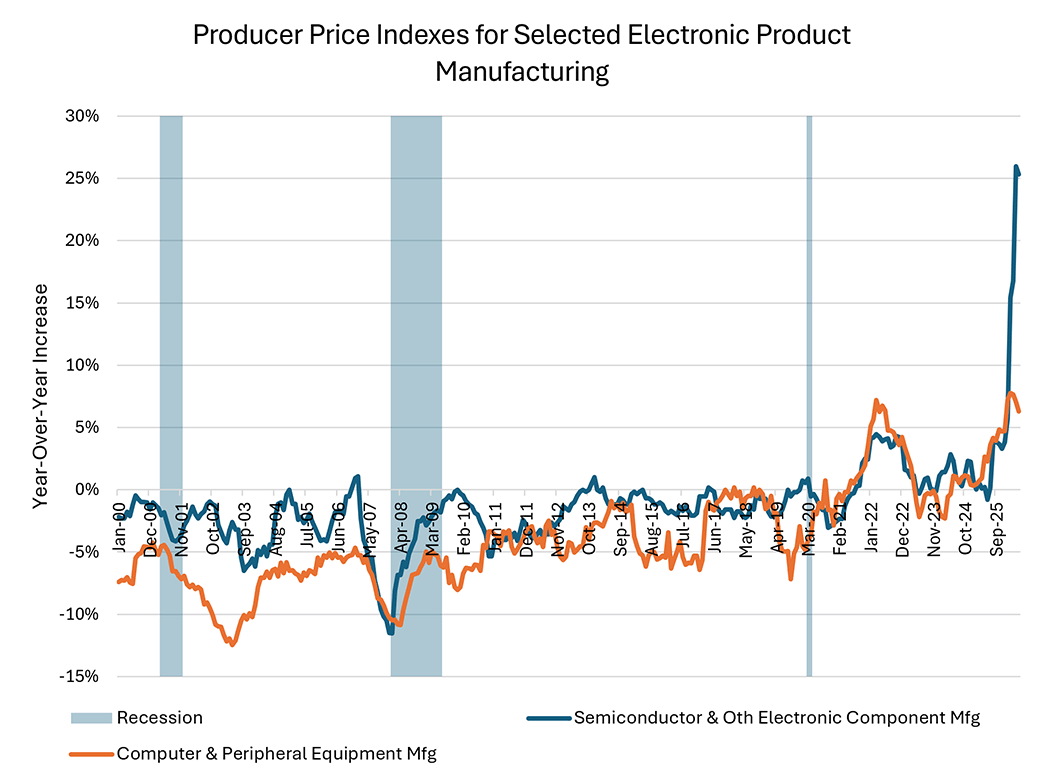
In both categories, price increases are at or near two-decade highs. In fact, the 26.0 percent year-over-year increase in the semiconductor and electronic component price index in April was a record high in data going back to December 1984, while February's 7.8 percent year-over-year increase for computer and peripheral equipment manufacturing was a record high in data going back to January 1995.
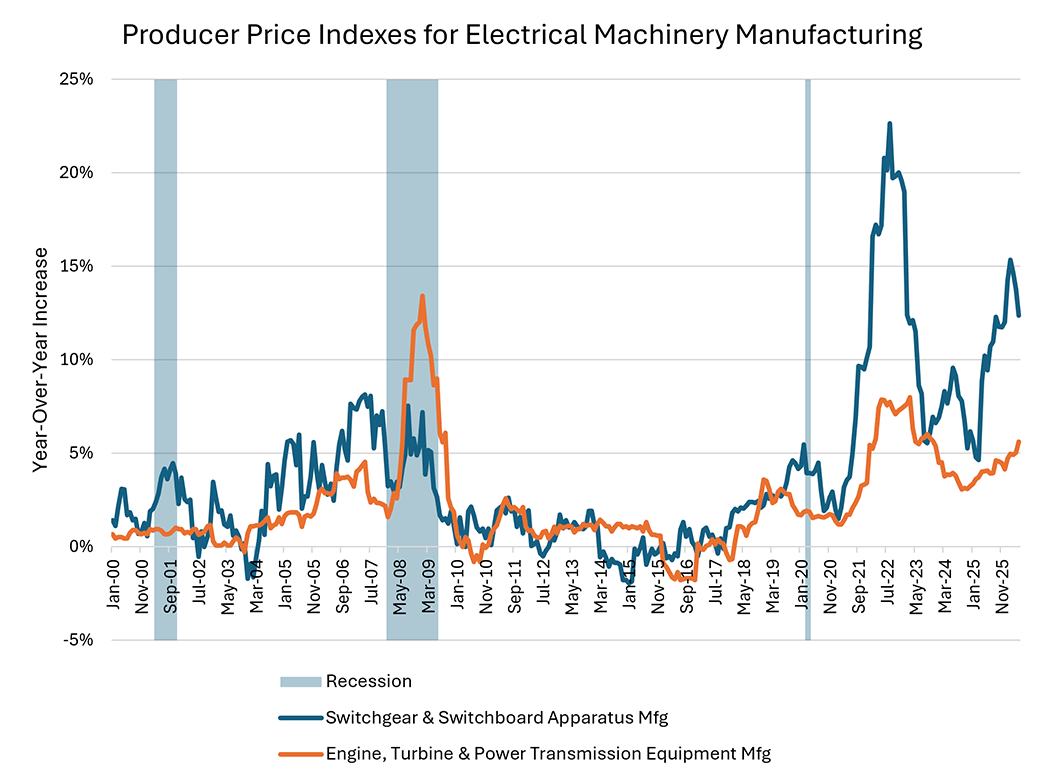
Growing demand for electricity to power data centers has also contributed to an increase in prices for hardware related to power generation and transmission. Figure 2 below shows that year-over-year price increase percentages for switchgear and switchboard apparatus manufacturing have risen to double-digit territory, near the range seen during pandemic supply shortages and well above the range observed in the 20 years prior to the pandemic. The figure also shows that year-over-year price increases in engine, turbine and power transmission equipment manufacturing are on the rise and are higher than the prepandemic-decade average.
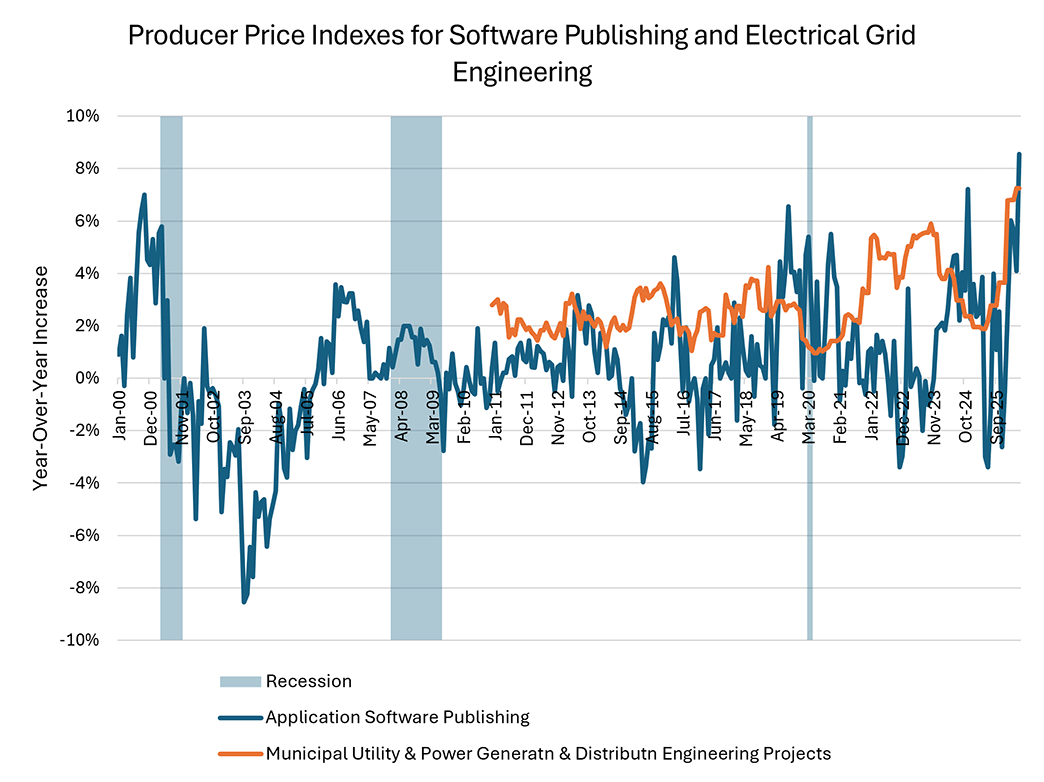
Elevated price increases aren't limited to physical hardware: They're evident for some AI and data center-adjacent services as well. Figure 3 below shows an increase in the PPI for application software publishing of 8.5 percent year over year in May, which was the highest in data going back to January 1998. Meanwhile, the PPI for engineering services related to municipal utility and power generation and distribution projects rose 7.3 percent year over year in May, the highest in data going back to December 2009.
While the previous three figures showed rising prices for producers, AI has made an imprint on measured consumer prices as well. Figure 4 shows that year-over-year growth in the computer software and accessories category of the personal consumption expenditure (PCE) price index rose to 14.5 percent in May, the highest in the history of the series dating back to January 1977.
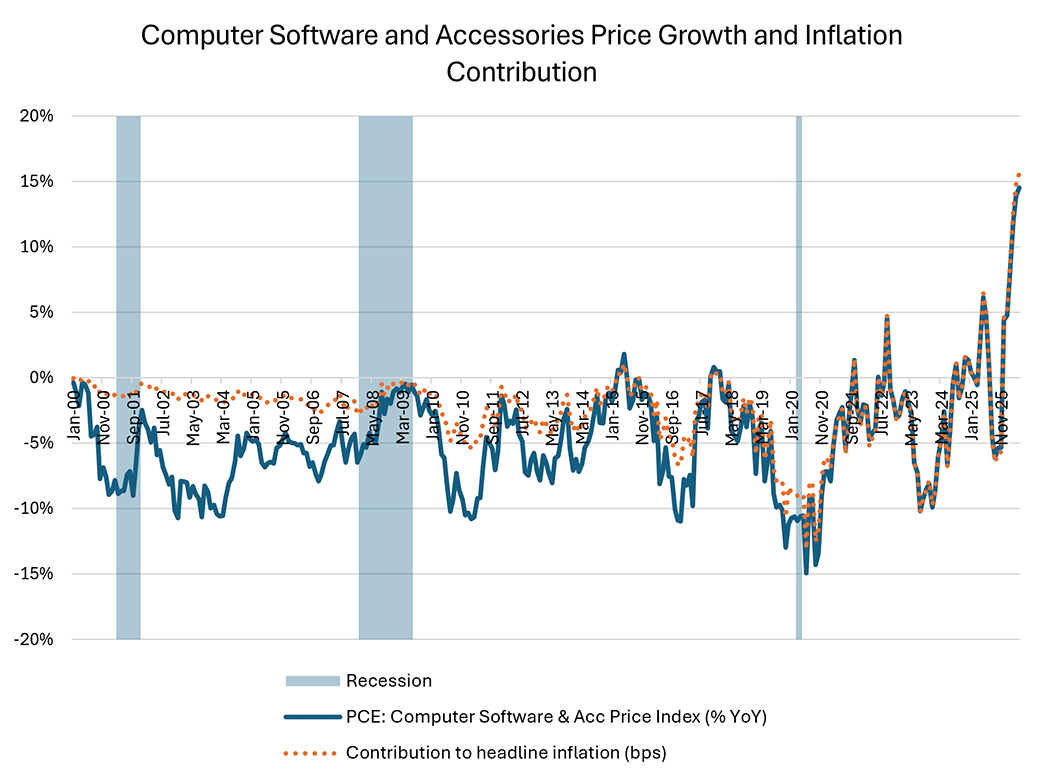
The figure also shows that this category — which makes up a little over 1 percent of PCE — contributed over 15 basis points to year-over-year headline PCE inflation that month, also a record high. However, research by economists at the Board of Governors suggests that this increase may be partly due to mismeasurement of software prices. In particular, software prices in the PCE price index are not quality adjusted, so the introduction of AI and large language model features in new software versions may be miscounted as a pure price increase rather than as a change to quantity or quality.
So far, AI and data center investment appears to have made a noticeable positive impact on inflation at both the producer and consumer levels. However, assuming these investments materialize into productivity gains that expand the supply-side capacity of the U.S. economy, their impact on price pressures could flip to the other direction, lowering costs and contributing negatively to inflation. This anticipated evolution will bear watching as the AI transformation continues.
Views expressed in this article are those of the author and not necessarily those of the Federal Reserve Bank of Richmond or the Federal Reserve System.


Contact Us