


< !--cell-- >
< !--end grid-x-->


How the Geography of Jobs Affects Unemployment
Why job accessibility is limited for some groups and what it means for anti-poverty policies
Econ Focus
Third Quarter 2014
In postwar America, many families moved away from urban centers into the rapidly developing suburbs. Culturally, these new communities were associated with economic opportunity, signifying middle-class values and upward mobility.
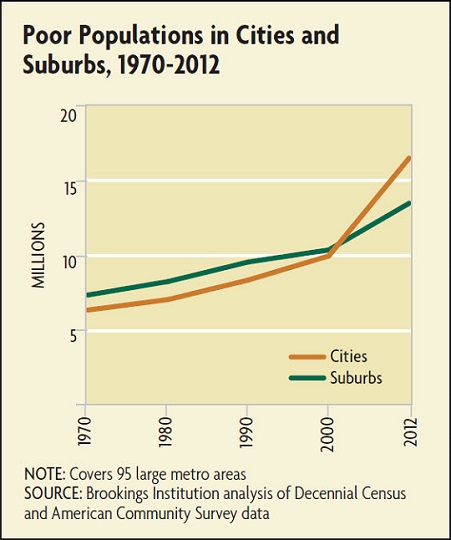
The path to economic mobility is no longer a highway leading from downtown to the suburbs. For example, the number of suburban residents in poverty may now exceed the number of urban-dwellers in poverty. According to the Brookings Institution, suburban poverty rose from 10 million in 2000 to 16.5 million in 2012, compared to an increase in urban poverty from 10.4 million to 13.5 million over the same period (see chart).
 Download article
Subscribe to Econ Focus
Receive an email notification when Econ Focus is posted online.
By submitting this form you agree to the Bank's Terms & Conditions and Privacy Notice.
Contact Us