This article is an early release from the upcoming Fourth Quarter issue of 2026.
Want to be notified when the magazine goes live? Subscribe to receive email alerts for Econ Focus.


This article is an early release from the upcoming Fourth Quarter issue of 2026.
Want to be notified when the magazine goes live? Subscribe to receive email alerts for Econ Focus.
On making decisions, modeling behavior, and choosing policy under uncertainty
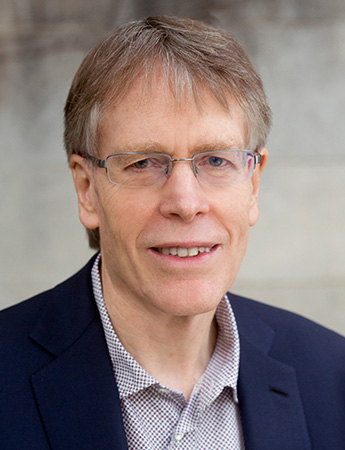
EF: You've thought deeply about how people and policymakers make decisions under uncertainty, and how economists can model that decision-making process while also facing their own uncertainties. How do you think about uncertainty, what has influenced your thinking, and where did your interest in this topic start?
Hansen: In the first part of my career, a large focus of economic research was on rational expectations models. These are models in which, as a simplification, you imagine that the economic actors inside your model basically have everything figured out. They know how to make probabilistic assessments. Of course, this was never viewed as literally true, but it was viewed as a very useful approximation. I did work that tried to think about methods that could study such models and exploit that type of modeling structure. It was a very productive time for me, but there was always this tension in my mind. I was imagining that economic agents, for simplicity, had things figured out, but I, as the econometrician, was struggling. The models I was writing down were flawed in some very direct ways. How do I proceed in this world in which I'm using simplified models, but they're probably wrong, and I'm not quite sure which is the right model? It led me to think that I shouldn't just model myself in these terms, but decision-making more generally. My long-term collaborator Tom Sargent and I both decided that would be a fruitful direction to push in.
We were initially influenced by some work in control theory and engineering, as well as real simulated work in statistics and elsewhere, to try to build on some of those ideas to broaden the notion of decision-making within economic models. I was lucky enough to have subsequently connected with some of the best decision theorists in the world. Their job is to think about prudent ways to make decisions in environments with uncertainty.
The thing that was appealing and intriguing to me was thinking about how we do this in a world where our models aren't perfect. Maybe there are multiple models and you're not sure which is the right one. Maybe a given model is a nice simplification that helps you think about the world and process things, but it's, in some very literal sense, wrong. You can't really write down a model of a complex reality. It just wouldn't be very useful, and we don't even know how to do it. So, we believe these models are useful even though they're simplifications. How do I really address that? This has been something that's captivated me.
The decision theory colleagues I would talk to, and in fact some who I've collaborated with, would pose this in a very abstract way and try to figure out from certain types of abstract postulates what would be a good way to behave. For me, it's always important to take things out for a spin and figure out how this really affects model building, decision-making, and the like. My earlier work was focused on trying to understand the private sector. There were lots of papers using models where the investors had everything figured out. What would happen if we shifted to this new perspective? How would that lead us to think differently about both the empirical evidence and the corresponding models?
In the last several years, I've shifted to more of a normative perspective to think about prudent ways to do policymaking in a world in which there are deep uncertainties. These days, there are lots of policy discussions in which people talk about deep uncertainty, but what exactly does that mean? How do I wrestle with that construct and not just let it be words?
EF: How do you distinguish between different types of uncertainty in your research?
Hansen: I like to think about it in terms of three categories. One is risk: Think of coin flips or dice rolls. You know probabilities, but you don't know outcomes. A lot of what economists teach has to do with risk aversion. How do decision-makers confront this type of risk in which they know probabilities but not outcomes?
Statisticians for a long time have wrestled with another source of uncertainty: I've got multiple models on the table, I may not know which is the right model, but I want to use evidence to try to figure that out. How do I put initial credibility weights on these different types of models? One possibility is that I just assign subjective probabilities to each one. The decision theory that interested me pushed away from that, recognizing that these are subjective uncertainties. How do I integrate into the analysis the fact that I don't know how much credibility to assign to these models exactly? That gave rise to a literature on ambiguity aversion, in contrast to risk aversion, and that became a very fertile area. It has a history in statistics — so-called "robust statistics" is related to this.
People often say we live in this data-rich environment, and so there's often this appeal to just let the data speak. The data out there are rich along some dimensions, but not all dimensions that are relevant for policy. A lot of economic and policy questions are specifically dynamic. You can't just let the data speak. There are still these subjective uncertainties which you must confront in some way or another. This strand of the literature is about how to confront those without having to make up subjective probabilities.
Then there's a third category that has more of its origins in control theory. We write down these dynamic models, they're tractable, we can do stuff with them, but we don't want to take them so literally. You can start exploring what happens if the models are flawed in different ways. How should we guard against that? That is robustness to potential model misspecification, which is the third category of uncertainty.
All three sources of uncertainty are very important. I started thinking about the deep uncertainties that people talk about — ambiguity and model misspecification — and mapped them into my models.
EF: One of your earliest explorations into how researchers might be able to cope with these types of uncertainty led to your development of the generalized method of moments (GMM). Can you describe what GMM does, how your work on it began, and how you view its impact today?
Hansen: I think that this statistical method became valued in economics in part because it allows you to do something without having to do everything. The idea is: I've got a high-dimensional dynamical system, can I somehow study one piece of it without having to capture the full aspect of it? How can I as a researcher do something without doing everything? As an econometrician, maybe I struggle with how to do model specification, so this is a way I can get away with just doing part of it. Now, there's a long history in econometrics about this type of limited information approach, so that aspect wasn't new to my work. Generalized method of moments was more about the dynamic aspect and allowed for more flexibility in terms of nonlinearities.
I started thinking about this in graduate school, in part after listening to some lectures by Chris Sims, and in part after trying to understand how one does certain types of limit arguments in cases in which there are some very general forms of temporal dependence. That ended up being an important input in the subsequent work I did on generalized method of moments estimation.
The work had kind of an interesting start. I was just out of graduate school, and my former advisor, Sims, called me and said, you should really get a paper out there that just does a simplified version of this in a very simplified setting because this is already relevant for certain applied papers coming out. And so, I write this paper in a simplified environment, I submit it, and it gets rejected because it's not general enough. So, I rolled up my sleeves and gave them full generality, and that ended up being successful.
EF: Finance was one of the first places where you and other researchers applied GMM. What makes finance a good space in which to study how economic actors account for risk and model uncertainty?
Hansen: I think what's fundamental to lots of economic dynamic models is some type of investment in something, broadly conceived. Part of the dynamic choice is how much am I allocating to current consumption, and how much am I thinking about the future? I think of those as investment-type decisions. This decision-making must be forward-looking because, in order for you to make an intelligent choice about what to do to prepare for the future, you have to speculate about what that future is going to be. Finance is an example of that: Portfolio analysis, but also more general investment problems, have this flavor to them. So, my interest in dynamics led naturally to those types of applications.
EF: You won the Nobel Prize in economics in 2013 for your research on financial markets and asset prices. What was that experience like, and how do you see your contributions in connection with the work of your co-recipients, Eugene Fama and Robert Shiller?
Hansen: If you had asked me in advance, I wouldn't have thought I was on the radar screen of the Nobel Prize committee to begin with, and I wouldn't have guessed I would be bundled with Fama and Shiller. It was interesting to me because my two mentors, my dissertation advisor Chris Sims and my long-term collaborator Tom Sargent, had won the Nobel Prize a couple of years earlier. If you look at the intellectual development of my work, it would be more connected to researchers of that nature. So, I figured at the very least I'd be off the hook for a long time.
The connection to Fama and Shiller had to do with the aspects of my research that explored the behavior of financial markets. Shiller was doing some work with models that I subsequently investigated in a more formal way. Shiller, along with my colleague Bob Lucas, put those models on the radar screen. Fama was taking a rather different approach to asset pricing and testing, and I guess you could argue that was somewhat complementary. But it wasn't as if the three of us had the same research ambitions — they were really quite different.
At the time, my work was viewed as the most obscure. Perhaps it still is. People viewed Fama and Shiller as opposite sides of things. Fama believed in efficient markets, and Shiller had skepticism about that. Shiller believed in bubbles and in speculative markets, and Fama definitely had some skepticism that those models were very useful. So, there were these debates going on between the two, and I remember on more than one occasion people would come to me and ask who's right, Fama or Shiller? My response ended up being the following: Instead of thinking about us as a line segment with me somewhere in between, think of us as a triangle.
One thing that changed after I got the Nobel Prize is that people were suddenly a lot more interested in me and my work. And so, it became much more important to me that I could explain to broader audiences why I thought my research was important and what it was adding. Before that time, I just wanted to get papers published. I started putting a lot more effort into thinking about how my research fit together and my overarching goals for it, whereas previously I had just let it unfold.
EF: Economists have traditionally modeled people as utility maximizers who seek to maximize their expected utility given the probability of different outcomes. In work with Tom Sargent, you developed a different "robustness" framework for thinking about how people make decisions under uncertainty. How does it differ from conventional utility maximization?
Hansen: I think about the following when I'm doing the counterpart to utility maximization: I'm not quite sure about the probabilistic inputs. I have some ideas, I may be able to put some bounds or restrictions on them, but I don't have precise knowledge of them. Given that, I think decision-makers do some type of sensitivity analysis. Instead of pretending they know the probabilities, they consider what would happen under different alternatives. We integrate that sensitivity analysis into our model of decision-making.
When you make decisions under risk, you make some statement about how risk averse you are. Under our framework, there's a similar type of statement about uncertainty aversion. How confident are you in these probabilities? Maybe some people are highly confident, or even overly confident, and other people are not so sure. This gives us a way to talk about confidence in terms of beliefs in a way that I find appealing. While I don't think a lot of actual decision-makers go through our algorithmic approach, I think they heuristically do some very similar things — some type of informal sensitivity analysis. That's part of prudent decision-making, and we're just trying to operationalize that.
Now, if I consider that anything could happen, then the sensitivity analysis becomes hopeless and I just give up. On the opposite side, I have full confidence that I've identified the right probabilities for each outcome. This framework gives us a way to go in between those two extremes. Exactly where you go in between comes down in part to the decision-maker's preferences.
EF: What led you and Sargent down the path of developing this theory?
Hansen: After the work by me and others documenting problems with the existing models, there was a decision theory that got embraced that focused on different ways to address risk aversion with an intertemporal aspect to it. It was a way to credibly enhance the aversion to risk in order to try to address some of the empirical challenges in these models. At the same time, there was a related literature going on in control theory called risk-sensitive control. It was a way to enhance the concerns about risk within a standard control theory framework.
We were first intrigued by these additional ways to incorporate risk aversion. But that literature also had another very interesting observation: There's an equivalent way you can think about this problem from a robustness standpoint where the decision-makers don't have full confidence in their model. It was a way to get something similar to enhanced risk aversion, but without risk aversion. Instead, this captures the fact that you know your models are approximations and you don't want to take them too literally. We found this second interpretation to be quite intriguing, and so we started looking for connections in other literature and tried to merge all these ideas together.
EF: Robustness seems like a good model for how investors in the financial market act under uncertainty. They have direct financial incentives to carefully think through their models. Do you feel like it is also a good approximation of how people respond to uncertainty in other contexts?
Hansen: Sometimes yes, sometimes no. I think it depends a lot on their experiences. Are we talking about something that they've had a fair bit of experience with, or are we talking about something that they are complete novices at? I think robustness probably has less to say about the complete novice case and more to say about people who've wrestled with making decisions under uncertainty and who are trying to do it in sensible ways. I don't want to say we can capture all psychological aspects of decision-making with this framework.
EF: Speaking of psychology, how does this framework compare to the approach that behavioral economists have taken to modifying traditional rational decision-making?
Hansen: I think of it as complementary, and pushing a slightly different angle. We're putting decision-makers into an environment that's highly complex, and that highly complex environment may be hard to sort out. We're driven by different notions of statistical complexity as we're trying to model our decision-making process. It is probably the case that behavioral economists can find more seemingly anomalous behavior in situations where the environment is quite complex, but they too often do not pay enough attention to the environmental complexity when they're thinking about the psychological distortions. I think it's an important interaction. Part of where we differ is our focus on trying to get some type of statistical quantification of the complexity of the environments that we're putting people into.
EF: More recently, your research has focused on applying this framework to decisions by policymakers. How does this connect to your earlier research in financial markets?
Hansen: There's certainly a big overlap in some of the tools. Before, I was driven by trying to explain existing empirical observations from financial markets and the macroeconomy. Sometimes we call that positive economics: We're trying to explain the way things are. When I shifted to thinking about policymaking, the work that I've been doing is not about trying to explain how policymakers actually make decisions. In that sense, it's not so much a positive theory as a normative theory. It asks the question: If we had the ability to make a really smart decision, what would we choose in an environment with uncertainty? And then we can look at different ad hoc policies and how close they might get us to this idealized solution. I'm using it to get these normative benchmarks about what would be a prudent way to address these uncertainties.
A lot of my recent focus has been on research related to climate change. There's lots of evidence about human impacts on the climate system, but if you want to estimate what the economic consequences are going to be down the road, we're pushing economies into places they haven't really been before, and so we can't come up with very sharp statements with great confidence about what those consequences will be. How do I factor that into prudent decision-making around climate change, and how does that affect the design of policy?
EF: What aspects of climate change drew you to the topic?
Hansen: I was convinced that this was a subject where you couldn't just let the data speak. There's data sparseness, from hypothetical damages as we warm the Earth to the impact on future temperatures of emitting carbon in the atmosphere. It was a subject where I thought uncertainty had to be important.
Like any type of research program, it has evolved in ways that you can't always anticipate ex ante. Now, my research has been more focused on the potential for technological solutions in the future to help us address climate change. A lot of the focus in policy discussions has been on emissions reductions. That is important, but how about the ability to come up with technologies that are not so carbon sensitive? That can include things like carbon capture or new, fully clean energy sources. Some of these technologies might be very successful in the short run, but others may only start becoming economically viable a couple of decades down the road. Should we as a society not do anything about those just because we're uncertain about their longer-term payoff? Or should we still be investing in them? Those are the types of trade-offs I've been interested in recently.
EF: As you've noted in your research, some have argued against making certain investments until we have more information. Based on your research, why might that not always be the best response?
Hansen: Suppose we suddenly became more uncertain about the successful payoff of a new technology versus being quite confident. What happens when I introduce that change? If I'm an investor and you tell me you're not very confident about what the payoff is going to be, one knee-jerk reaction is that I should invest less in that technology. But there's also another force that works in the opposite direction. Imagine that you make a discovery that allows you to have fully clean energy sources in the future and you are no longer damaging the climate system. That resolves a chunk of uncertainty that you're facing now. As you become more uncertainty averse, that success becomes a much bigger deal.
So, at the same time that this enhanced aversion to uncertainty leads you to be more cautious about the payoff horizon for these types of technology investments, succeeding becomes a much bigger deal, and that pushes you toward making those investments. In certain scenarios, this second force dominates, and you actually want to be more proactive in the face of greater aversion to uncertainty. It's not always true. If we push the aversion far enough, you're eventually going to conclude that this investment is not very productive, and you should be doing something else. But there's this range under which you might want to do more of it.
I want to fight against the notion that just because you're more uncertain about something, or more uncertainty averse, you should be more passive. That's not always the case. Sometimes, in spite of the limits to your knowledge, you might want to be more proactive rather than less.
EF: What role do you see for economists in the debate over how to respond to weather-related risks?
Hansen: A lot of economic and scientific advisors don't want to talk openly about uncertainties because they're afraid that they'll undermine themselves. So, you project this false sense of confidence to impact policy. I think a much healthier situation is one in which we can be more open about the scientific credibility of our inputs and still give constructive policy advice. To the extent we can push more in that direction, I think it can lead to a more productive discussion about policy in the face of uncertainty.
EF: What are you working on now that excites you?
Hansen: I have a long-standing interest in what economists call intangible capital. When we write down models of capital, we typically initially think about the physical capital stock that allows us to do things. But a lot of capital these days is knowledge-based or organizational capital. How do we figure out those valuations? That's where the uncertainties come into play. I'm working on how we can use the tools we've developed to study climate change to think about valuations in these other sets of circumstances as well.
In the climate space, I'm starting to explore the distributional aspects of it. Climate change is something that affects different people differently. How can we extend the methods we've developed so far to address these distributional impacts?
Another important issue I'm looking at is the fact that society can invest in many different possible technologies to address climate change, not just one. There's carbon capture, nuclear fusion, and many others. How do we decide where to make investments in the face of uncertainty? So, going from a model with a single technology to one with multiple technologies. How do you know what's the right portfolio mix when there is a high degree of uncertainty? I've been communicating with geoengineering and energy experts to try to get more credible inputs into that research agenda.
Present Positions
Professor in Statistics, David Rockefeller Distinguished Service Professor, University of Chicago; Professor in Finance, University of Chicago Booth School of Business; Professor in Economics, University of Chicago; Director of the Macro Finance Research Program
Selected Additional Affiliations
Distinguished Fellow, Macro Finance Society; Fellow, American Finance Association; Fellow, National Academy of Sciences; Member, American Academy of Arts and Sciences; Fellow, Econometric Society
Education
Ph.D. (1978), University of Minnesota; B.S. (1974), Utah State University


Receive an email notification when Econ Focus is posted online.
By submitting this form you agree to the Bank's Terms & Conditions and Privacy Notice.