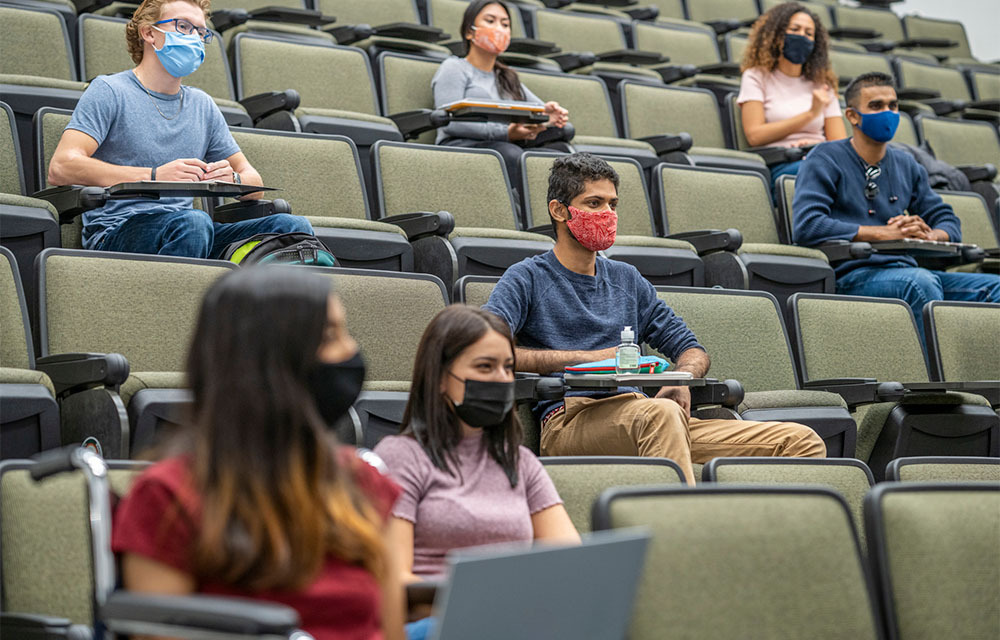

This week's post details the aggregate success rates across a wide range of student characteristics from nearly 300,000 students across 189 institutions.
Exploring Economics
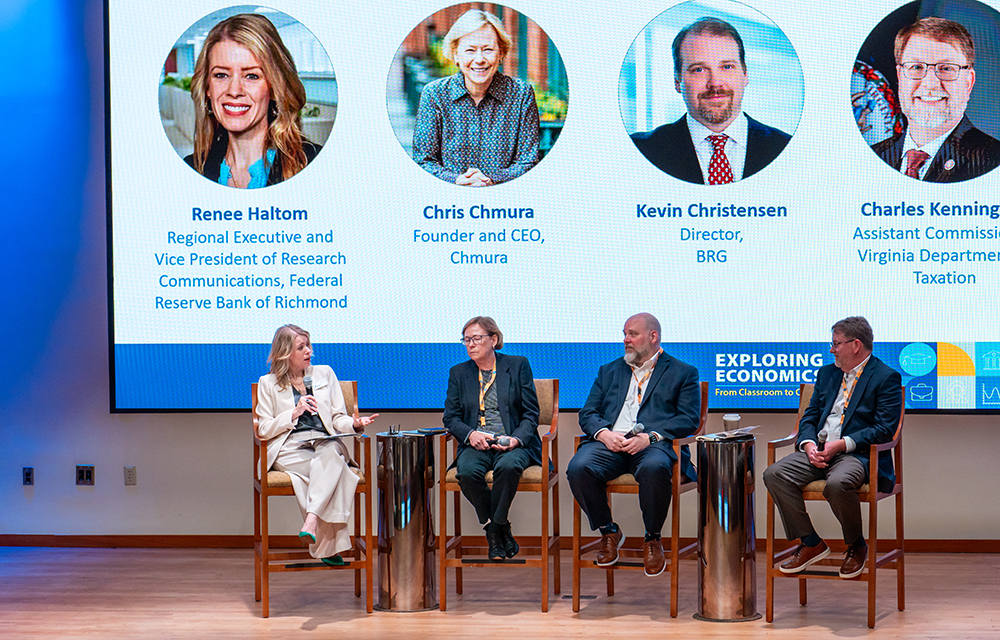
The Richmond Fed supports economics education by helping undergraduate students explore the wide range of career paths in economics. The Exploring Economics conference provides insights into translating classroom knowledge into a meaningful career from professionals in the field.
Our Conference
The Richmond Fed supports economics education by helping undergraduate students explore the wide range of career paths in the economics field. The conference provides insights into translating classroom knowledge into a meaningful career from professionals in the field.
Conference Summaries and Related Content
A recent webinar from the Richmond Fed's Center for Rural Economies showed how three leaders from rural community colleges are tailoring their programs to better serve the needs of their students and communities.
Support services, or wraparound services, give community college students supports to succeed in higher education. But with cost as the biggest barrier, how can community colleges meet their students' needs?
Last week, we released results from the 2025 Survey of Community College Outcomes. This post explores the characteristics of Fifth District community college students and the community college pathways that are often overlooked by traditional graduation rate metrics.

Through initiatives like Invest in What's Next, the Richmond Fed supports a healthy job market by helping students make informed decisions about future work and education pathways.
Congress' passage of H.R.1 (OBBA) has brought new changes to higher education funding, including the establishment of a Workforce Pell Grant program. What does this mean, and how might agencies, institutions, and students respond?
Bethany Greene
Regional Economist
Many rural areas lack sufficient resources to strengthen the STEM pipeline. How is one nonprofit in South Carolina addressing the workforce gap in hopes of reducing rural flight?
Wraparound services like transportation assistance and child care foster student success. This post highlights how some community colleges are supporting student parents.
Community colleges can leverage a number of creative strategies and partnerships to provide long-term housing solutions for the unique student populations they serve.
Although community college enrollment has increased, housing has also become a growing obstacle for student success.
Stephanie Norris
Associate Director, Community College Initiative
New data on credentials earned by undergraduate students show that postsecondary attainment is not a one-size-fits all endeavor.
Programs within and outside prison walls provide opportunities for a new beginning.
Laura Dawson Ullrich
Director, Community College Initiative
Results from the 2024 Survey of Community College Outcomes indicate that Pell Grant recipients from the 2019-2020 cohort had success rates that lagged their non-Pell Grant recipient peers. While both groups earned associate degrees at roughly the same rate, Pell Grant recipients were less likely to transfer to a four-year institution prior to receiving an award.
Laura Dawson Ullrich
Director, Community College Initiative
This post both updates and corrects a previous post about fall 2024 college enrollment: Total undergraduate college enrollment increased 4.5 percent nationwide compared to fall 2023.
Performance-based funding policies are designed to incentivize institutions to meet a set of performance metrics, and in return, receive additional revenue. However, designing and implementing these models is complex.
Anthony Tringali, James Melton and Laura Dawson Ullrich
Hurricane Helene caused widespread destruction across the Fifth District. Two community college presidents in North Carolina shared how the storm impacted their institutions and the role they have played in the recovery efforts.
The Richmond Fed's community college team recently unveiled results of the 2024 Survey of Community College Outcomes during a webinar that highlighted key findings and insights from two community college presidents.
Tom Barkin
President and Chief Executive Officer
The Survey of Community College Outcomes aims to capture the positive outcomes and critical role community colleges play in the workforce development needs of their communities.

Recent research suggests that there are meaningful differences in the content of recommendation letters correlated with gender, race and ethnicity.
Joseph Mengedoth
Regional Economist
People change jobs over time, but they are likely to remain in the industries that are most highly tied to their initial fields of study.
Laura Dawson Ullrich
Director, Community College Initiative
A preview of the NSC's fall 2024 college undergraduate enrollment is here, and as anticipated, freshmen enrollment appears to have declined, although total enrollment is up.
Wraparound services offer a wide range of support that may otherwise prevent students from completing their education. However, funding wraparound services at community colleges can be challenging.
A sneak peek at results provides some insights on what makes a community college successful, often influenced by the types of students they serve and their local workforce development needs.

Stephanie Norris
Associate Director, Community College Initiative
Recently released evidence from the NCES indicates the prevalence of personal and educational disruptions on community college students, but more detailed data would be needed to see the entire picture.
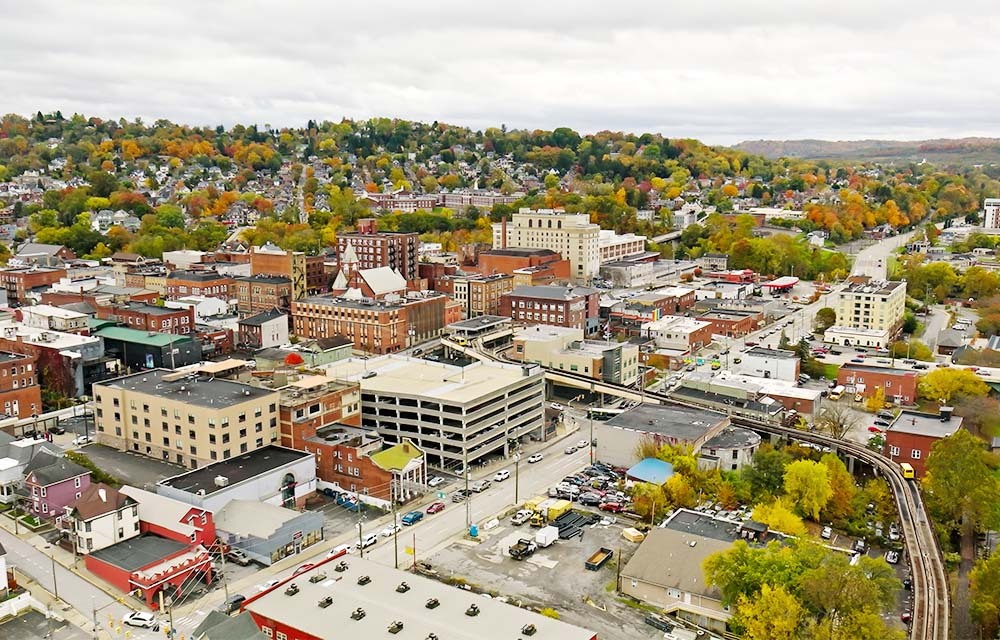
Just 75 minutes from Richmond, Farmville and its surrounding counties are an idyllic setting for bargain hunters and outdoor adventurers alike. The area's economic landscape is notably shaped by its educational institutions and agricultural roots, alongside other attractions. Recently, our Community Conversations Team made a visit to the area to learn more about their economic strengths and opportunities.
Although the communities surrounding universities experienced some shielding effects from previous recessions, the unemployment rate actually increased in these areas following the COVID-19 recession.
Laura Dawson Ullrich
Director, Community College Initiative
As we wrap up data collection for 2024 and prepare to release our results in November, this post highlights what we've done so far, what we're working on, and future plans for the project.
Stephanie Norris
Associate Director, Community College Initiative
Initial IPEDS estimates show community colleges serve almost 75 percent of dually enrolled students nationwide, and there is significant variation across states, institution types, and student demographics.
The credential-jobs misalignment among middle-skill workers has an impact on the economy, causing inefficiencies in employer-employee matching. Rethinking how community colleges and universities approach transfer agreements could provide better alignment.
With an anticipated decline in the college-age population, high costs of four-year degrees, and changing demands among employers, parents, and students, higher education seems to be at a crossroads.
College degree attainment is associated with higher labor force participation, and although better data is needed to understand fully, this seems to also be true for those who have some college but no degree.
Grey Gordon, Aaron Hedlund and Brennan Merone
How has college tuition trended recently, and why?
Stephanie Norris
Associate Director, Community College Initiative
Community colleges serve students in many ways depending on their educational goals, so much of the value these institutions provide for their communities is overlooked when measuring success.
Laura Dawson Ullrich
Director, Community College Initiative
The looming FAFSA crisis has continued into June, likely leading to a decrease in enrollments for grant and federal loan dependent schools. In turn, community colleges may see an enrollment increase.
Historically, most higher education state and local spending has gone to four-year institutions. As community colleges play an increasing role in training workers for high-demand jobs, have funding patterns kept up?
Issues surrounding the new FAFSA form have led to a sharp decline in form completions for the coming academic year. This could result in overall enrollment declines across higher education, but it is likely to hit some groups of students and institutions harder than others.
Borrowers didn't have to make payments for three and a half years. How will they — and the economy — weather a rapidly changing student loan landscape?
The motivations behind the new gainful employment policy are noble, but community colleges, especially in rural areas, could be disproportionately harmed by the earnings premium test.
In this article, we discuss the history and motivation of federal gainful employment legislation and what the new rules entail.
Dual enrollment programs can play an important role in creating a strong, educated workforce, but they need to make sure the funding policies are available and effective.
Laura Dawson Ullrich and Jacob Walker
Community colleges offer non-credit workforce training programs that prepare students for high-demand jobs. Data on these programs and their students are limited. The Richmond Fed's Survey of Community College Outcomes aims to bridge the data gap.
Jacob Walker
Pell Grants make community college more accessible for low-income students, but those enrolled in non-credit coursework aren't eligible. Expanding eligibility would be significant for both institutions and students.
Jacob Walker
Data on dual enrollment programs is limited, but through the Richmond Fed's Survey of Community Colleges Outcomes, we now have a better understanding of how Fifth District community colleges serve high school students and how these students perform.
Laura Dawson Ullrich
Director, Community College Initiative
Community colleges started out as junior colleges and meant to restrict access to higher education. However, they have evolved to increase access to higher education and the workforce.
Jason Kosakow, Laura Dawson Ullrich and Jacob Walker
In order to observe Fifth District community college outcomes, we decided to collect consistent data that would enable us to calculate a new success metric: the Richmond Fed Community College Success Rate.
Laura Dawson Ullrich
Director, Community College Initiative
Community colleges differ from four-year institutions in important ways, but they are often measured by the same metrics.
Laura Dawson Ullrich
Director, Community College Initiative
Funding formulas for higher education have traditionally been based primarily on full-time equivalent enrollment. This creates disparities between funding for four-year institutions and community colleges that may worsen over time.
The STEM East initiative aims to show students in eastern North Carolina how they can stay and thrive in their home communities.